
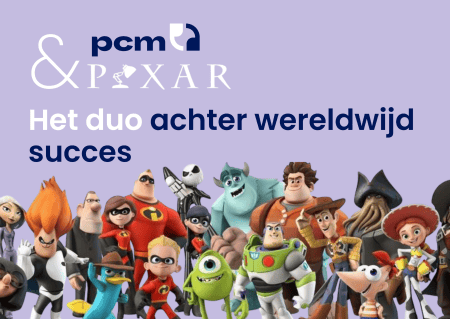
Als je aan Pixar denkt, denk je waarschijnlijk aan filmklassiekers, zoals Toy Story, Finding Nemo, Up of Inside Out. Maar deze films zijn meer dan entertainment. Het zijn verhalen die iets in je raken, hoe oud je ook bent.
Een belangrijk ingrediënt is de manier waarop Pixar-verhalen en het Process Communication Model® (PCM) samenkomen. Door bewust te werken met Persoonlijkheidstypen ontstaan personages die écht voelen – herkenbaar, menselijk en dichtbij.
Het model achter de magie
PCM gaat uit van één basisgedachte: iedereen bestaat uit een unieke mix van zes Persoonlijkheidstypen. Bij de meesten van ons is één type vaak sterker aanwezig: het beïnvloedt hoe we de wereld zien, contact maken en reageren onder druk.
De zes PCM-Persoonlijkheidstypen zijn:
- Gestructureerd denker – logisch, georganiseerd, nauwkeurig
- Doorzetter – gedreven, waardegericht, opmerkzaam
- Rebel – spontaan, speels, creatief
- Dromer – reflectief, rustig, onafhankelijk
- Promotor – daadkrachtig, overtuigend, pragmatisch
- Harmoniser – warm, empathisch, mensgericht
We dragen al deze zes energieën in verschillende verhoudingen bij ons. Dat verklaart waarom mensen anders reageren op dezelfde boodschap – en waarom communicatie, of dat nu in films of organisaties is, alleen werkt als je deze afstemt op de ander.
Ja: Pixar-schrijvers gebruiken PCM – en dat zie je meteen
Weinig mensen weten dat Pixar-scenarioschrijvers zijn getraind in PCM. Maar wanneer je dat eenmaal weet, kun je het niet meer níet zien: personages zijn bewust gebaseerd op één of meer Persoonlijkheidstypen. Zo voelt altijd wel íemand in de zaal zich gezien, begrepen en verbonden.

Neem Finding Nemo. Dory – met haar speelse impulsiviteit, charme en humor – straalt een duidelijke Rebel-energie uit: licht, grappig, spontaan. Toch verrast ze ons af en toe met momenten van scherpte en logica, die passen bij de energie van de Gestructureerd denker.
Omdat veel mensen makkelijk hun Rebel-energie aanspreken, ontstaat er direct een klik.
Dat is geen toeval – dat is strategie. Pixar gebruikt een communicatiemodel dat bewust emotionele banden smeedt richting álle energieën in het publiek.
De kracht van Pixar’s verhalen schuilt hierin:
ze schrijven niet alleen verhalen,
ze smeden emotionele banden.
Waarom deze aanpak overal werkt
Veel storytellers, leiders of coaches communiceren vooral vanuit hun eigen meest beschikbare energie. Dat voelt natuurlijk, maar je loopt er vaak een groot deel van je publiek mee mis.
Pixar omzeilt dat door bewust personages te creëren die samen alle zes energieën vertegenwoordigen. Hoe meer diversiteit aan energieën, hoe groter de kans dat een verhaal bij iedereen ergens binnenkomt.
Daarom blijven Pixar-films niet alleen succesvol in de bioscoop, maar leven ze voort van generatie op generatie.
Voor coaches, HR-professionals en contentmakers is de les helder: spreek alle zes energieën aan, en vergroot je bereik.
PCM gaat verder dan andere modellen (en dit is waarom)
Veel communicatie- of persoonlijkheidsmodellen delen mensen in hokjes in. Dat is overzichtelijk, maar het biedt tegelijkertijd weinig diepgang. PCM kiest een andere route. Het model is:
- dynamisch: het laat zien hoe gedrag verandert in tijden van stress.
- praktisch: je kunt het direct toepassen in gesprekken.
- breed inzetbaar: van Hollywood-scripts tot het dagelijks werk van leiders en coaches.
PCM geeft inzicht in de complexiteit van menselijke interactie, zonder ingewikkeld te worden.
Van Pixar naar de dagelijkse praktijk
Je hoeft geen scenarioschrijver te zijn om PCM te gebruiken. Of je nu coach, trainer, HR-professional of teamleider bent: PCM helpt je om de meest beschikbare energie van iemand te herkennen, je communicatie af te stemmen op diens psychologische behoeften én boodschappen te formuleren die bij iedereen kunnen landen – niet alleen personen die op jou lijken.
Dus de volgende keer dat je een Pixar-film kijkt, vraag jezelf dan eens af: “Welk personage sprak mij het meest aan, en waarom?”. Grote kans dat dat personage de energie weerspiegelt die bij jou het meest beschikbaar is – of misschien wel de energie die je eigenlijk het liefst zou hebben.