
Herkennen leiders in jouw organisatie negatieve aandacht zodat ze het kunnen omzetten in iets positiefs, of verzanden ze in een machtsstrijd vol miscommunicatie?
Als kinderen zich misdragen, zeggen we dat vaak ze vragen om ‘negatieve aandacht’. Het is ongelooflijk hoeveel energie en moeite kinderen doen om aandacht te krijgen. Vaak werkt dit negatieve gedrag alleen maar averechts, met straf of andere negatieve gevolgen als resultaat. Dit geldt ook voor volwassenen, al is hun gedrag vaak meer verfijnd en kostbaarder.
Ouders leren, net als goede leiders, vanzelf hoe ze negatieve energie kunnen omzetten in positieve motivatie, zodat iedereen wint.
Stel, je vraagt het de leiders in je organisatie, hoe zouden zij deze vragen dan beantwoorden?
Heb je ooit:
je afgevraagd waarom volwassenen zich soms gedragen als verwende kinderen?
gemerkt hoeveel energie er verloren gaat aan drama?
gewild dat mensen zich op hun werk zouden focussen in plaats van elkaar te saboteren?
gezien hoe miscommunicatie het vertrouwen en het moreel kan aantasten?
je afgevraagd waarom mensen zich lijken te gedragen op manieren waarmee zij zichzelf alleen maar schaden?
jezelf destructief gedrag zien vertonen, ondanks dat je weet dat het niet helpt?
Hoe komt negatieve aandacht op je werkplek tot uiting? Hoeveel tijd besteed je aan het blussen van brandjes, het steeds opnieuw uitvechten van dezelfde strijd en het maken van beleid om het gedrag van slechts een paar mensen te beheersen? En hoe krijg jij negatieve aandacht?
Het veranderen van onze leiderschapsmindset over negatief gedrag kan echt het verschil maken. Dit is de zevende van acht mindsetveranderingen die de slagkracht van leiders kunnen veranderen.
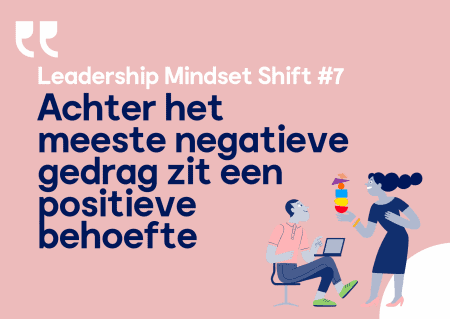
Leiderschap Mindset Shift #7 – Achter het meeste negatieve gedrag zit een positieve behoefte
Door onvervulde positieve behoeften te erkennen kan veel negatieve energie en miscommunicatie worden vermeden. In ruil daarvoor krijg je meer betrokken en gemotiveerde werknemers.
De positieve kanten van negatieve aandacht
Het Process Communication Model® (PCM) legt een krachtige, voorspelbare en zichtbare relatie bloot tussen negatieve en positieve aandacht.
In Mindset Shift #6 kwamen de zes soorten motivatoren voor menselijk gedrag aan bod, elk gekoppeld aan een persoonlijkheidstype. Het voldoen aan onze psychologische behoeften is voor mensen een overlevingsinstinct, net als ademen. En – verrassing – als mensen hun behoeften niet positief vervuld krijgen, zullen ze proberen diezelfde behoeften negatief te vervullen, al dan niet bewust. Dit noemen we distress en het veroorzaakt voorspelbare miscommunicatie.
Als we negatief gedrag waarnemen, is dat in de meeste gevallen een symptoom dat de persoon probeert aan zijn behoeften te voldoen, maar dan op een negatieve manier.
Hieronder vind je de zes voorspelbare en waarneembare gedragsclusters, de zogenaamde faalmechanismen, die aan het licht komen wanneer iemand niet op een positieve manier aan zijn behoeften kan voldoen. Voor meer inzicht over hoe je positief in je behoeften kunt voorzien in plaats van negatief, kijk je in Mindset Shift #6 over motivatiebehoeften.
Overcontroleren
Overcontrole uit zich in micromanagen, overwerken en kritiek leveren op het werk van anderen. Iemand houdt zich overmatig bezig met wat eerlijk is, maar ook met geld en kleine details. Je herkent het aan opmerkingen als “Je verspilt mijn tijd” of “Wat een idioot!” – typische opmerkingen voor mensen die geen positieve erkenning krijgen voor hun productieve werk en tijdsstructuur.
Fouten maken
Fouten maken houdt in: het vertrouwen in zichzelf verliezen, het onbedoeld verprutsen op een manier die kritiek van anderen uitlokt en overdreven kritisch zijn op zichzelf. Opmerkingen als “Ik weet zeker dat ik het verknald heb” of “Waarom ben ik zo’n idioot?” komen vaak voor bij mensen die geen positieve erkenning krijgen voor hun persoon en zintuigen.
Overtuigingen doordrukken
Dit houdt in: eigenwijs, zelfingenomen en veroordelend worden, op kruistocht gaan, van elke kwestie een alles-of-niets geval maken en wantrouwend worden tegenover mensen die hun overtuigingen niet delen. Opmerkingen als “Ze zijn duidelijk niet betrokken” of “Sta je aan mijn kant of niet?” komen vaak voor bij mensen die geen positieve erkenning krijgen voor hun toegewijd werk en overtuigingen.
Schuld geven
Excuses maken, anderen de schuld geven, de onschuld zelve uithangen, alle verantwoordelijkheid uit de weg gaan, zeuren en klagen. Dat past allemaal in het straatje van de beschuldiger. Opmerkingen als “Het is niet mijn schuld” of “Ik moest het van haar doen” komen vaak voor bij mensen die geen positief contact krijgen.
Manipuleren
Manipuleren houdt in: negatief drama creëren, mensen tegen elkaar opzetten, misbruik maken van mensen voor eigen gewin of mensen in het nauw drijven zodat ze alleen maar kunnen verliezen. Opmerkingen als: “John kraakte je werk af tegenover het team, maar dat heb je niet van mij” of “Alleen losers zwijgen tijdens vergaderingen. Zeg maar tegen John dat hij zich met zijn eigen zaken moet bemoeien” zijn veel voorkomende opmerkingen van mensen die geen positieve uitdaging krijgen.
Passief afwachten
Terugtrekken, zich isoleren, interactie vermijden, niks gedaan krijgen, projecten starten maar niet afmaken en zich afsluiten. Een passieve houding dus. Opmerkingen als “Het is allemaal te veel.” of “Ik weet niet wat ik moet doen.” komen vaak voor bij mensen die onvoldoende tijd en ruimte om alleen te zijn ervaren.
Leiders die het verband tussen positieve en negatieve aandacht begrijpen, kunnen beter ingrijpen op een manier die de situatie daadwerkelijk verbetert in plaats van verslechtert.
Is het echt zo simpel?
Waarschijnlijk heb je nu veel vragen. Zoals:
Is het simpelweg aansluiten op de positieve behoefte iets wat het negatieve gedrag zal stoppen?
Als ik reageer op de positieve behoeften, wordt het negatieve gedrag dan niet beloond?
Hoe kan ik proactief zijn zodat ik überhaupt niet met de negatieve aandacht te maken krijg?
Moeten we het gedrag niet nog steeds aanpakken?
Hoe beïnvloedt dit onze sturings- en prestatiegesprekken?
Dit zijn absoluut de juiste vragen. En de antwoorden zouden je zomaar eens kunnen verrassen.
Verander je mindset, word een betere leider
Het begrijpen van het verband tussen positieve motivatie en negatieve distress is de focus van deze module in het PCM Leiderschapsprogramma.
In deze module leren leiders:
hun eigen distressgedrag te herkennen en om te buigen;
de machtsstrijd rond negatief gedrag te vermijden;
kostbare miscommunicatie te verminderen;
op een positieve manier negatieve conflicten te verminderen;
processen voor beloning en prestatiemanagement te verbeteren.
Wil jij aan de slag met het versterken van jouw leiderschap? Neem contact met ons op.