Veel organisaties zijn altijd op zoek naar manieren om efficiënt te werken, dat is geen geheim. Een veel geziene oplossing hiervoor is standaardisering, bijvoorbeeld van procedures en processen. Dat kan goed werken, maar is niet voor alle zaken een goed idee. Denk eens aan je werkplek. Deze is van grote invloed op je werkprestaties – een ‘one size fits all’ omgeving kan hierin erg demotiverend werken. Dankzij de pandemie is het extern en hybride werken in een stroomversnelling terecht gekomen. Dat laat ook zien hoe belangrijk de werkplek is voor iemands welzijn en productiviteit.
Stel, je vraagt het de leiders in je organisatie, hoe zouden zij deze vragen dan beantwoorden?
Heb je ooit:
- gemerkt dat sommige mensen genieten van vergaderingen, terwijl anderen afhaken of zich terugtrekken?
- weinig betrokkenheid ervaren tijdens een virtuele vergadering?
- gemerkt dat mensen van nature een voorkeur hebben voor een bepaalde werkplek?
- gezien dat mensen de neiging hebben om hun werkplek te personaliseren als ze de kans krijgen?
- je afgevraagd waarom sommige mensen zich het liefst binnen een interactieve groep begeven, terwijl anderen liever alleen werken, zonder afleiding?
Of ze nu op afstand werken, op locatie met anderen zijn, op reis zijn voor hun werk of een combinatie van deze drie; effectieve leiders vinden altijd een omgeving (en anders passen ze deze aan) voor ultiem welzijn en de beste prestaties. Daarnaast helpen ze anderen om hetzelfde te doen.
Hoeveel keuze en controle hebben je werknemers over hun werkplek? Creëren je leiders omgevingen waarin verschillende mensen optimaal kunnen functioneren?
Het veranderen van je mindset over werkplekken kan het verschil maken. Dit is de vijfde van acht mindsetveranderingen die de slagkracht van leiders kunnen veranderen.
Leiderschap Mindset Shift #5 – Eén manier past niet bij iedereen
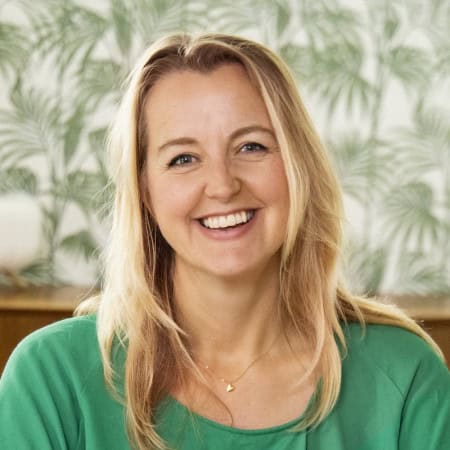
Kay Sargent verricht baanbrekend werk op het gebied van neurodiverse ontwerpen. Samen met haar collega’s ontdekt ze steeds meer over hoe groot de invloed is van onze werkplek op ons welzijn en prestaties.
We zijn allemaal verschillend en moeten dus stoppen met de aanname dat iedereen is zoals wij zelf zijn. Mensen moeten de mogelijkheid krijgen om de ruimte te ontdekken waar ze kunnen floreren. – Kay Sargent
Kay raadt bedrijven aan om hr-beleid en -procedures te onderzoeken die persoonlijke aanpassingen mogelijk maken voor een omgeving op maat. Waarom? Omdat gemiddeld 80% van de omzet van een bedrijf weer wordt besteed aan de mensen. Kay: “Wanneer de werkplek een negatieve invloed heeft op iemands kansen om op een hoger niveau te functioneren, kost dat een bedrijf een hoop geld.”
Omgevingsvoorkeuren en persoonlijkheid
Persoonlijkheid is een vorm van neurodiversiteit omdat het een grote invloed heeft op hoe iemand de wereld om zich heen waarneemt en erop reageert. Het Process Communication Model® biedt een handig kader voor het herkennen en aanpassen van omgevingen voor verschillende persoonlijkheidstypen.
De PCM inschattingsmatrix
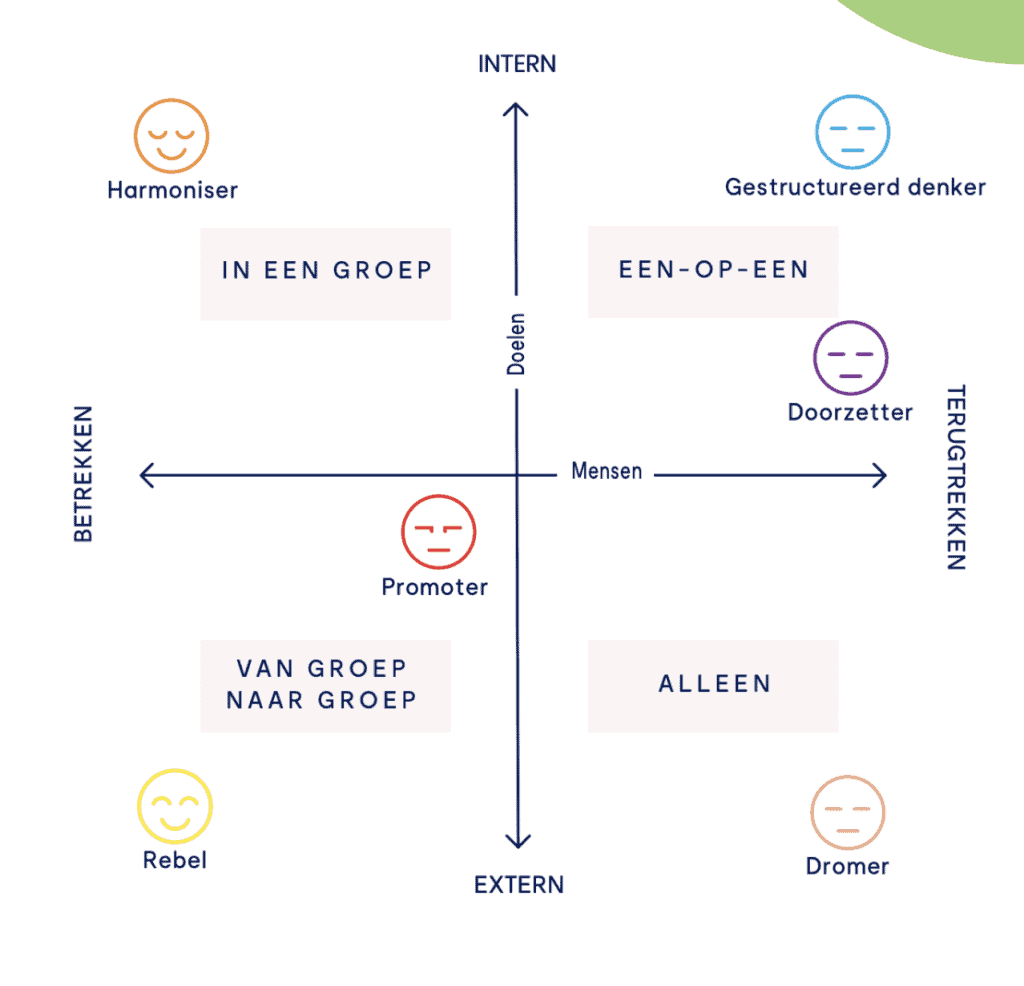
Sommige mensen zijn intern gemotiveerd om doelen te bereiken. Ze kijken naar zichzelf om te beslissen wat belangrijk is en wat ze nu moeten doen. Verantwoordelijkheid is waar ze in uitblinken.
Sommige mensen zijn extern gemotiveerd om doelen te bereiken. Ze gaan ‘aan’ door prikkels uit de wereld om hen heen. Reactievermogen is hun sterkte.
Sommige mensen zijn meer betrokken bij anderen en geven de voorkeur aan een sociale omgeving waarin ze met elkaar in contact kunnen komen. Relaties opbouwen is waar ze in uitblinken.
Sommige mensen trekken zich meer terug en geven de voorkeur aan minder interactie met anderen. Verbeelding is hun kracht.
Op het snijvlak van Doelen en Mensen zie je vier verschillende kwadranten, die elk een omgevingsvoorkeur vertegenwoordigen.
Omgevingsvoorkeuren
In een groep
Mensen die intern gemotiveerd en betrokken zijn, geven de voorkeur aan groepen. Ze krijgen energie van sociale interacties en zijn gemotiveerd om relaties op te bouwen en te onderhouden. Ze willen werken in een veilige, stimulerende omgeving met veel mogelijkheden om in contact te blijven met de mensen die ze mogen.
Eén-op-één
Mensen die intern gemotiveerd en teruggetrokken zijn, geven de voorkeur aan één-op-één settings. Ze krijgen energie van doelgerichte gesprekken over ideeën, waarden en concepten. Ze werken het best in een omgeving met minder afleiding en meer tijd en ruimte om zich te concentreren en te denken.
Van groep naar groep
Mensen die extern gemotiveerd en betrokken zijn, zijn ook graag bij anderen, maar om een andere reden. Ze voeden zich met de energie om hen heen, dus trekken ze van nature naar de plek waar alle actie en plezier is. Ze werken het best in omgevingen die dynamisch, creatief, stimulerend, spannend en leuk zijn.
Alleen
Mensen die extern gemotiveerd en teruggetrokken zijn, zijn het liefst alleen. Ze hebben tijd en ruimte nodig om na te denken en krijgen energie van het alleen zijn. Ze waarderen richting in de vorm van taken en concepten om aan te werken, maar doen het werk liever alleen.
Wil je de kracht van omgevingsvoorkeuren benutten en de valkuil van “one size fits all” vermijden? Stel jezelf dan eens de volgende twee vragen.
1. Hebben mijn werknemers keuze in waar en hoe ze werken?
2. Hebben mijn werknemers zeggenschap over waar en hoe ze kunnen werken?
Hoe meer opties en controle je je werknemers kunt bieden, hoe beter hun kansen zijn op een passende werkplek. Dit is met name relevant nu bedrijven worstelen met het werven en behouden van toptalent.
Wees flexibel in je werkplekken om toptalent aan te trekken en te behouden
Stel je de eens voor dat je rekening zou houden met verschillende voorkeuren voor een werkplek. Hoe zou je virtuele vergaderingen anders kunnen aanvliegen? Hoe kun je bij het ontwerpen van fysieke werkplekken meer opties en zeggenschap voor werknemers inbouwen?
Lees dit geweldige artikel over het ontwerpen van een neurodiverse werkplek
“Als je iemand buiten de mix laat, heb je geen inclusie. Dan heb je vervorming.” – Olivet Jones
Verander je mindset, word een betere leider
Leren hoe je de omgevingsvoorkeuren van verschillende persoonlijkheidstypen kunt herkennen en je eraan kunt aanpassen is de focus van deze module in het PCM Leiderschapsprogramma.
In deze module leren leiders:
- persoonlijkheidsinclusieve werkplekken te creëren;
- het welzijn en de prestaties van je medewerkers te verbeteren;
- de effectiviteit van vergaderingen en andere bijeenkomsten te verbeteren.
Wil jij aan de slag met het versterken van jouw leiderschap? Neem contact met ons op.