
Wist je dat de meeste communicatie non-verbaal plaatsvindt? Miscommunicatie komt vaak voor omdat we zo gefocust zijn op wat we bespreken dat we het proces missen van wat er wordt gecommuniceerd.
Als je leidinggevenden in je organisatie zou bevragen, hoe zouden zij deze vragen dan beantwoorden?
Heb je ooit…
- Een interactie met iemand gehad en je afgevraagd wat er nou ‘echt’ gebeurde?
- Iemand horen zeggen: “Je toon bevalt me niet”?
- Het gevoel gehad verkeerd begrepen te worden?
- ‘Gemengde boodschappen’ gekregen omdat iemand het ene zei, terwijl de lichaamstaal iets anders aangaf?
- Iets luider gezegd en gemerkt dat het geen verschil maakte?
- Gewenst dat je een breder publiek kon bereiken?
Hoe goed communiceren jouw leiders? En welke impact heeft dat op de betrokkenheid van medewerkers, het behoud van personeel, de klantenservice en het moreel van het team? Wat als je de instrumenten had om dit te verbeteren? Welk verschil zou dit maken voor jouw organisatie, de cultuur en het merk?
Een andere manier van denken over leiderschap kan het verschil maken. Dit is de eerste van acht mindsetveranderingen die de effectiviteit van jouw leiderschap kunnen veranderen.
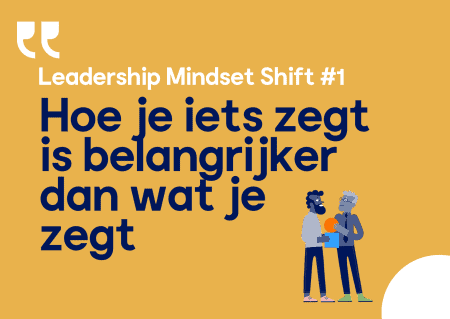
Leiderschap Mindset Shift #1: Hoe je iets zegt is belangrijker dan wat je zegt
Zoals net benoemd komt miscommunicatie vaak voor omdat we zo gefocust zijn op wat we zéggen, dat we het proces missen van wat er wordt gecommuniceerd. Door je meer te richten op het proces van hoe je communiceert, kun je de impact van je boodschap en de kwaliteit van je communicatie sterk verbeteren.
Dit heeft een wetenschappelijke basis. Het Process Communication Model® identificeert zes voorkeuren die mensen gebruiken in communicatie. Het gaat allemaal om het ‘hoe’ van de communicatie. Wanneer je de ‘energie’ van hoe iemand het liefst communiceert oppikt, kun je op dezelfde golflengte komen. Het kan een enorm verschil maken in of mensen je echt horen en je intentie waarderen.
De zes voorkeuren in communicatie zijn:
- Mededogen: Laten zien dat je om mensen geeft en dat ze bij jou veilig zijn.
- Logica: Logisch zijn en rationeel zinvol zijn.
- Humor: Energiek, opgewekt en spontaan zijn.
- Verbeelding: Tijd en ruimte geven om na te denken.
- Waarden: Relevante verbanden leggen met waarden, overtuigingen en principes.
- Initiatief: Dingen voor elkaar krijgen en een hoog tempo aanhouden.
Je kunt iemands voorkeur voor communicatie herkennen door te letten op hoe hij communiceert. Gebruik deze tabel om iemands favoriete manier te identificeren. Pas vervolgens jouw energie aan om op dezelfde golflengte te komen voor meer verbinding en een sterkere relatie.
Ervaar de kracht van flexibele communicatie
Neurobiologisch onderzoek toont aan dat wanneer je een bericht ontvangt in jouw favoriete taal, de kans groter is dat je meer aandacht aan de boodschap besteedt, de inhoud makkelijker onthoudt, positief reageert en je beter voelt.
Hieronder een paar gebieden waarin leiders de verschillende manieren van communiceren kunnen toepassen om effectiever leiding te geven. Stel je voor hoe jij dit zou kunnen toepassen op deze gebieden:
- Betere respons op e-mails.
- Verhoogde opkomst bij een vergadering.
- Betere samenwerking met je moeilijkste relaties.
- Een grotere invloedssfeer.
Flexibele communicatie is een keuze
Flexibele leiders maken bewuste keuzes in hun communicatie om de verbinding en verstandhouding te versterken. Zij ontwikkelen hun vaardigheden in het toepassen van alle zes communicatievoorkeuren. Hoe bekwaam zijn jouw leiders in bewuste communicatie?
Verwar ongemak niet met een gebrek aan authenticiteit. Door bewust te communiceren met de verschillende voorkeuren kun je meer zien, meer zijn en meer doen door je hele persoonlijkheid als leider te ervaren en te benutten. Hoewel het in het begin ongemakkelijk en ingewikkeld kan voelen, is het een enorme aanwinst voor leiders.
Verander je mindset om een betere leider te worden
Het benutten van de communicatievoorkeuren in leiderschap is de focus van een van de acht modules in het PCM Leiderschapsprogramma. Leiders leren hoe zij:
- Empathie kunnen verbeteren en vertrouwen op kunnen bouwen
- Makkelijker contact maken met anderen
- Verbinding en positieve invloed kunnen vergroten
Wil jij aan de slag met het versterken van jouw leiderschap? Neem contact met ons op.
De inhoud van dit bericht is grotendeels gemaakt door en wordt gebruikt met toestemming van Next Element Consulting LLC, die de auteursrechten op deze inhoud bezit. Er wordt geen aanspraak gemaakt op het eigendom van deze inhoud.