
Leidinggeven op basis van aannames is eigenlijk nooit een goed idee. Het houdt vooroordelen in stand en roept defensieve reacties op. Bovendien is het gevaarlijk, want door een andere, eigen invulling te geven aan een situatie, ben je ‘blind’ voor wat er daadwerkelijk gebeurt. Zo mis je mogelijk belangrijke signalen vanuit je team.
Stel, je vraagt het de leiders in je organisatie, hoe zouden zij deze vragen dan beantwoorden?
Heb je ooit:
- het gevoel gehad dat jij en een gesprekspartner langs elkaar heen praatten?
- moeite gehad om te ‘klikken’ met iemand aan wie je leiding gaf?
- energie gekregen na een interactie met bepaalde mensen, terwijl je uitgeput was na interacties met anderen?
- gehoopt dat je iemand beter begreep zodat je wist hoe je op de juiste manier moest communiceren?
- een aanname over iemand gedaan die niet juist bleek te zijn?
Mensen willen gezien en gehoord worden voor wie ze zijn, niet op basis van veronderstellingen, vooroordelen of aannames. Hoe goed interpreteren jouw leiders het gedrag van anderen? Communiceren ze met iedereen hetzelfde of kunnen ze zich aanpassen op basis van met wie ze communiceren? Kunnen ze anticiperen op de communicatiestijl die anderen nodig hebben door gedrag te observeren?
Het veranderen van je mindset over communicatie kan het verschil maken. Dit is de vierde van acht mindsetveranderingen die de slagkracht van leiders kunnen veranderen.
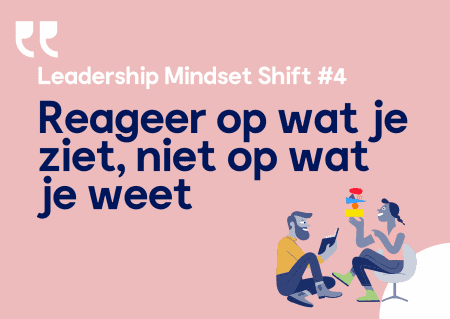
Leiderschap Mindset Shift #4 – Reageer op wat je ziet, niet op wat je weet
Het Process Communication Model® onderscheidt verschillen in hoe mensen communiceren. Deze verschillen zijn waarneembaar door woorden, toon, houding, gebaren en gezichtsuitdrukkingen. Wanneer je deze gedragskenmerken kunt herkennen, kun je als leider persoonlijker communiceren en een one-size-fits-all aanpak vermijden. Want dat leidt er juist toe dat mensen zich niet gehoord en erkend voelen. Andermans reactie zal snel duidelijk maken of we echt communiceren en op één lijn zitten, of niet.
Vier communicatiekanalen: hoe je weet of je op één lijn zit
Effectieve communicatie vraagt om tweerichtingsverkeer. Als je ‘ingetuned’ bent met iemand anders, betekent dit dat je boodschap wordt ontvangen zoals bedoeld. Ook zal de ander zodanig reageren dat je weet dat je wordt begrepen. Hoeveel van je dagelijkse interacties voldoen aan dit criterium? Wat zou er veranderen als je dat aantal zou kunnen opschroeven?
Net zoals je een radio of tv op het juiste kanaal afstemt om te genieten van je favoriete programma, moeten mensen op hetzelfde kanaal staan om met elkaar te communiceren. Elke persoon heeft een eigen voorkeurscommunicatiekanaal. We maken onderscheid tussen vier varianten.
Zorgzaam: Sommige mensen communiceren het beste als we ze koesteren en onze zorgzame kant tonen, bijvoorbeeld door hen te laten zien dat ze worden gewaardeerd.
Vragend: Sommige mensen reageren het best als we om informatie vragen, hen vragen na te denken en te antwoorden met feiten en meningen, zoals twee computers die gegevens uitwisselen.
Emotief: Anderen houden ervan als we spontaan en humoristisch zijn in onze communicatie, om het gesprek luchtig, levendig en leuk te houden.
Directief: Weer anderen communiceren het beste als we direct zijn, weinig woorden gebruiken en hen specifiek vertellen wat we willen.
Reageer op wat je ziet, verbeter interpersoonlijke communicatie
Stel je eens voor wat het effect van de PCM-communicatiekanalen kan zijn op jouw interpersoonlijke communicatie: dagelijkse interacties, e-mails, sms’jes en zelfs moeilijke gesprekken, maar dan op maat. Het leidt tot beter begrip, meer betrokkenheid en effectievere communicatie als je de manier waarop je communiceert aanpast aan de persoon met wie je communiceert. En er zijn meer voordelen.
- De focus blijft op gedrag, niet op onuitgesproken aannames.
- Misverstanden worden vermeden en er is minder weerstand.
- We worden eraan herinnerd dat we zelf verantwoordelijk zijn voor hoe we met elkaar communiceren.
- Het helpt gezonde communicatie en (ongezonde) miscommunicatie te herkennen.
Verander je mindset, word een betere leider
Leren hoe je communicatie met verschillende persoonlijkheidstypen herkent en aanpast op basis van waarneembaar gedrag in plaats van aannames, is de focus van deze module in het PCM Leiderschapsprogramma.
In deze module leren leiders:
- zelfbewust te worden van hun eigen communicatiestijl;
- zich meer bewust te worden van verschillende communicatiestijlen;
- de kwaliteit en impact van hun e-mails, sociale media en andere virtuele communicatie verbeteren;
- energieverspilling door doodlopende gesprekken te voorkomen;
- anderen te stimuleren om zich gehoord en begrepen te voelen.
Wil jij aan de slag met het versterken van jouw leiderschap? Neem contact met ons op.