Ik hoorde het weer: “dat is mannen-eigen hè, want vrouwen komen van Venus”. Die uitdrukking die alle mannen op één hoop gooit en alle vrouwen op een andere hoop*.
Het komt uit het boek van John Gray – “mannen komen van Mars, vrouwen komen van Venus”. Daarin stelt hij dat vrouwen en mannen elkaar niet begrijpen, omdat we verschillend communiceren, in andere dingen goed zijn en andere doelen nastreven. Bijvoorbeeld: vrouwen praten meer, mannen zijn van informatie, vrouwen van het gevoel, mannen actiegericht. En dat alles omdat we van verschillende planeten komen.
Echter: er zijn ook kletsgrage mannen en stille vrouwen, er zijn mannen die zorgzaam zijn, vrouwen in de techniek, mannen die graag alleen zijn en vrouwen aan de top. Gelukkig maar.
Stereotype
Een stereotype is een vaststaand denkbeeld over een groep mensen. Elke keer dat in jouw ogen zo’n stereotype bevestigd wordt, wordt het sterker. Als het een keer niet klopt dan roepen we “uitzonderingen bevestigen de regels!”. We willen liever bevestigen dan dat we ons afvragen of ons beeld wel klopt.
Het beeld dat we van de groep mannen en de groep vrouwen hebben klopt best vaak niet, dus maken we subgroepen met jongensachtige meisjes en meisjesachtige jongens.
OK, dus vrouwen komen niet van Venus, en mannen niet van Mars. Hoe zit het dan wel met de verschillen tussen ons mensen? Eén belangrijk aspect is persoonlijkheid.
Zes persoonlijkheidstypen IN ons
Taibi Kahler, een Amerikaanse klinisch psycholoog, observeerde mensen heel nauwkeurig en ontdekte patronen in communicatie, kwaliteiten, voorkeuren en gedrag. Welgeteld zes clusters. Hij bevestigde zijn ontdekkingen met wetenschappelijk onderzoek. Die zes clusters zijn de verschillende persoonlijkheidstypen die ieder van ons IN zich heeft, maar één ervan is het meest zichtbaar:
Mensen met veel Harmoniser-energie zijn warm en meelevend. Ze willen dat jij je goed voelt en willen gewaardeerd worden om wie ze zijn
Mensen met veel Gestructureerd denker-energie zijn verantwoordelijk en denken logisch. Ze zijn op zoek naar feiten en gegevens.
Mensen met veel Doorzetter-energie zijn toegewijd en scherp. Ze willen graag gerespecteerd worden voor hun visie en overtuiging.
Mensen met veel Promotor-energie zijn direct en charmant. Ze vinden altijd een manier om iets voor elkaar te krijgen.
Mensen met veel Rebel-energie zijn spontaan en creatief. Ze zijn energiek en vinden het leuk om iets nieuws te proberen.
Mensen met veel Dromer-energie hebben een sterke verbeeldingskracht en zijn kalm. Ze nemen graag de tijd om te reflecteren en concepten uit te denken.
Deze persoonlijkheidstypen hebben veel invloed op hoe iemand denkt, voelt, zich gedraagt en communiceert.
Als alle vrouwen van Venus zouden komen en alle mannen van Mars, dan zou een deel van deze typen voor mannen moeten gelden en een deel voor vrouwen, bijvoorbeeld iets als: alle vrouwen hebben veel Harmoniser energie en alle mannen veel Gestructureerd denker- of Promotor energie.
En dat blijkt niet het geval.
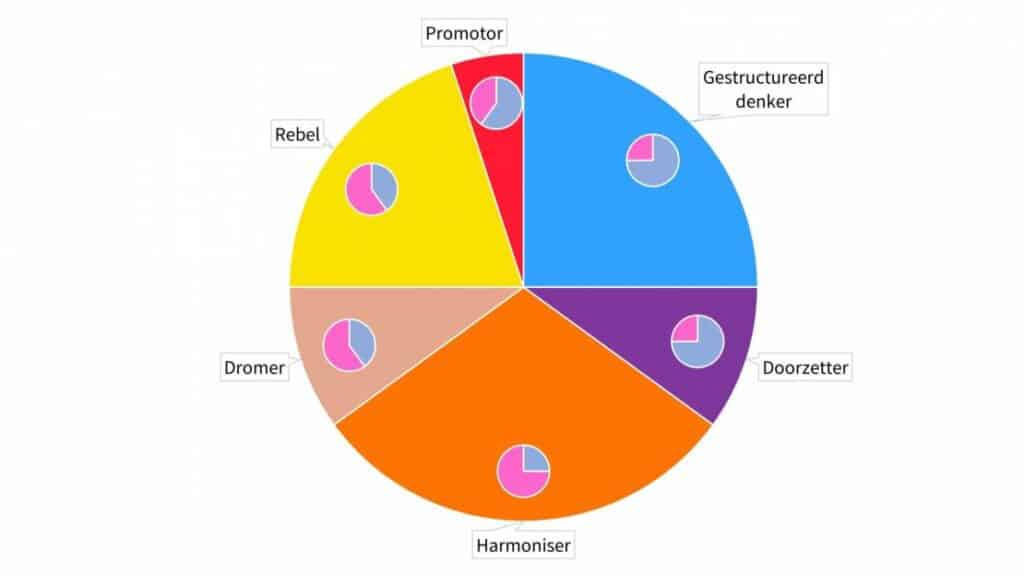
Bij wetenschappelijk onderzoek horen getallen, dus de percentages zijn bekend. Weliswaar voor de Noord Amerikaanse bevolking, maar er is geen reden om aan te nemen dat het elders in de wereld anders zou zijn. Alle PCM trainers wereldwijd (ik ook) leren anderen hoe je kan observeren welk persoonlijkheid je bij iemand op dat moment ziet. Met die informatie kan je flexibel communiceren (dat leren we je ook). En niemand heeft nog gezegd “gek, in ons land lijkt het heel anders”.
Hieronder heb ik de verdeling in een diagram weergegeven. Bij elk type zie je ook de verdeling tussen mannen en vrouwen (Sorry, het is in kleur. Sommige mensen vinden getallen-staatjes saai en ik heb al zoveel tekst. Als je het niet goed mocht zien, laat het me weten en ik stuur je de getallen).
Wat heb je eraan?
Denk nu alsjeblieft niet mensen van Mars, Venus, Jupiter, Saturnus, Uranus of Mercurius komen omdat er 6 types zijn. Het zijn types IN mensen en niet types VAN mensen, we hebben het allemaal IN ons. De volgordes verschillen. Zoveel planeten hebben we niet.
Nee, mensen zijn verschillend en uniek en dat is goed zo. Anders is het saai. We vullen elkaar aan. Kijk naar de kwaliteiten van elk individu, vier de verschillen, ga in gesprek en waardeer de diversiteit. We hebben elkaar zo nodig.
PS. het kan lastig zijn om met die verschillen in anderen om te gaan. Of met de verschillen in jezelf.
Wil je daar beter mee om leren gaan in relatie tot anderen, je team, elkaar of jezelf, neem dan vooral een kijkje op Uvanti.nl
*Natuurlijk zijn er mensen zijn die zich niet thuis voelen bij vrouwen óf mannen, maar voor de leesbaarheid hanteer ik het in dit artikel wel.